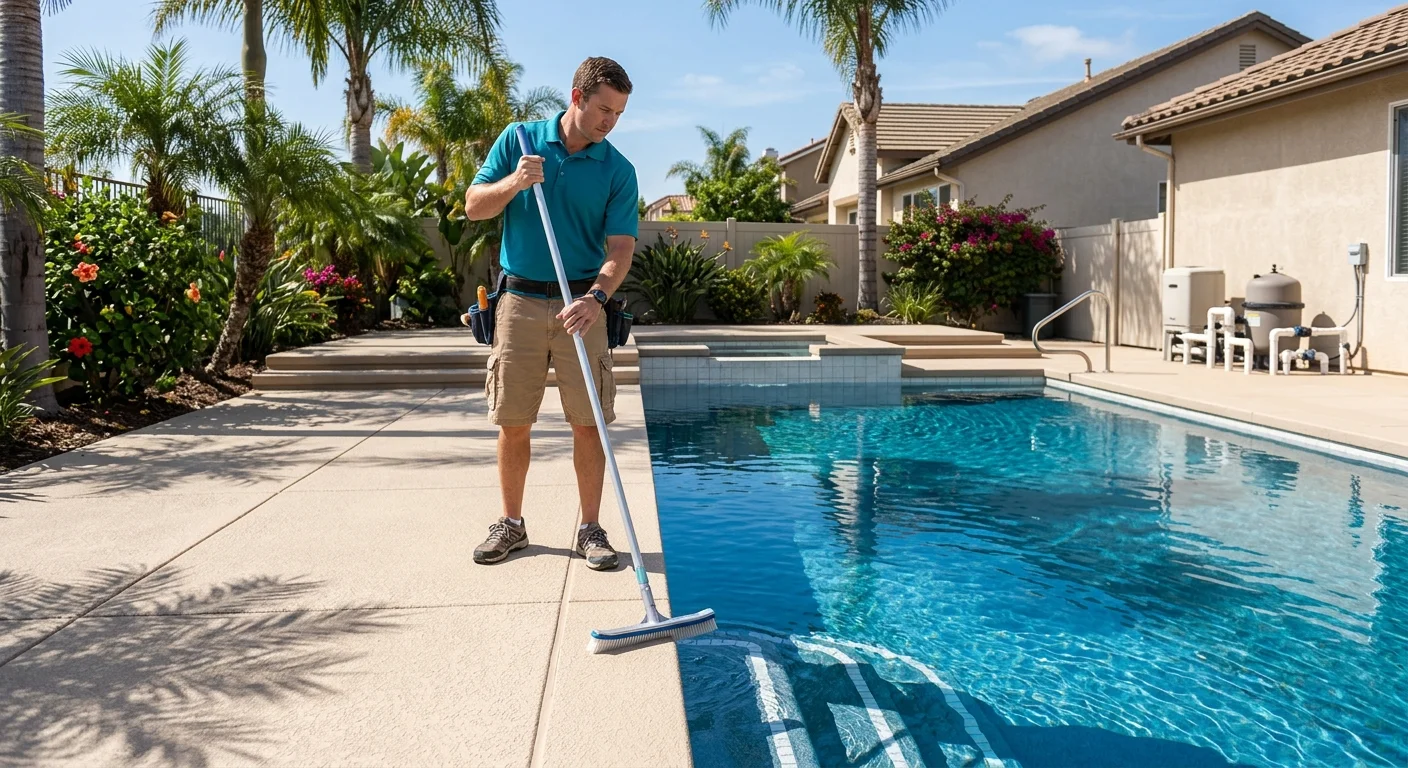
Your San Diego pool deck takes a beating. From relentless sunshine to chlorine splashes and constant foot traffic, it’s no wonder that cracks, fading, and deterioration appear over time. When your once inviting pool area starts to look tired, it might be time to consider pool deck resurfacing in San Diego. It’s a smart way to revitalize your outdoor living space without a full demolition.
What pool deck resurfacing covers and what it doesn’t
Pool deck resurfacing is essentially applying a new, protective, and decorative layer over your existing concrete pool deck. Think of it like a fresh coat of paint for your walls, but much more durable and specialized for outdoor, wet environments. This process aims to conceal minor imperfections, enhance aesthetic appeal, and provide a safer, more comfortable surface.
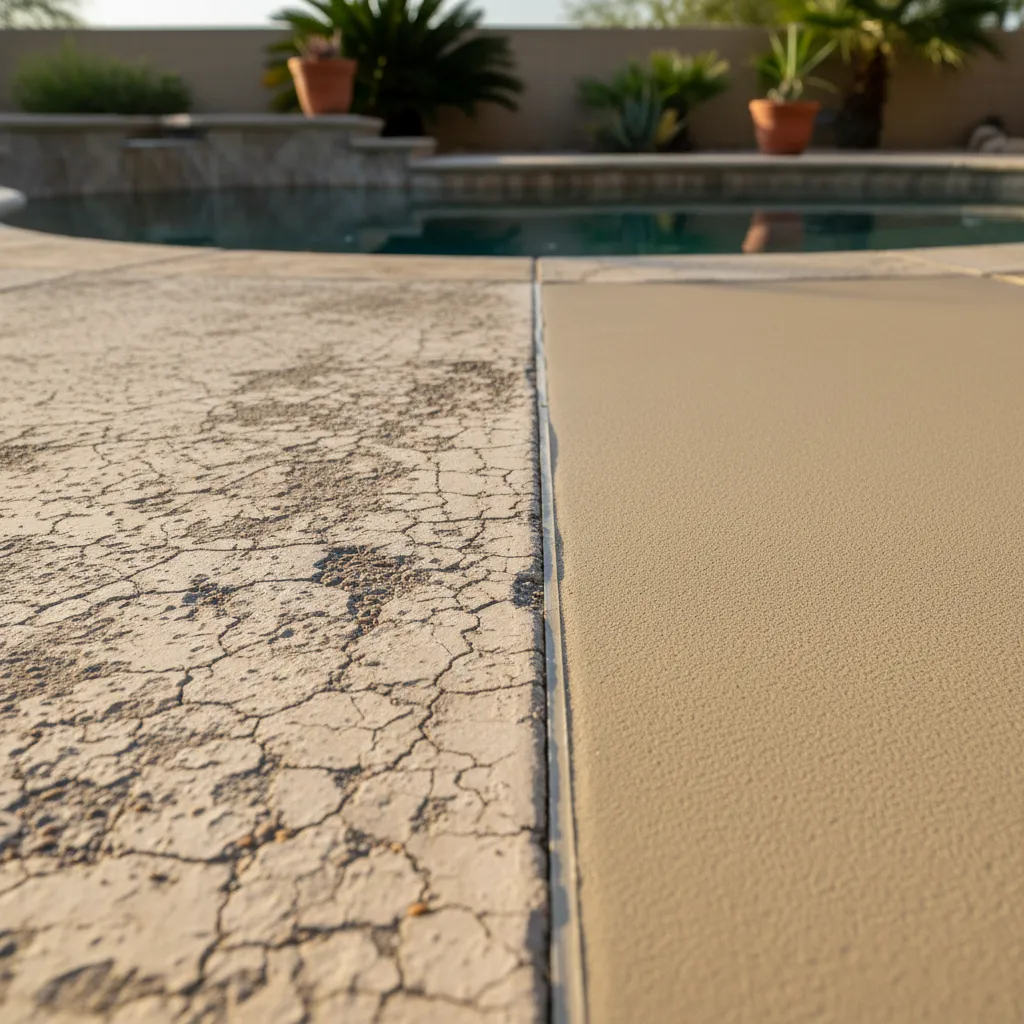
When we talk about resurfacing, we’re typically addressing cosmetic issues such as surface cracks, pitting, staining, and fading. It’s a fantastic solution for decks that are still structurally sound but have lost their original luster. A good resurfacing job will often include minor crack repair and surface preparation to ensure the new coating adheres properly and lasts for years. It can transform an old, worn-out deck into a beautiful, functional centerpiece for your backyard.
However, it’s crucial to understand what resurfacing doesn’t cover. If your deck has significant structural damage, such as large, deep cracks, severe shifting, or crumbling concrete, a simple resurfacing won’t be enough. These issues often indicate underlying problems with the deck’s foundation or sub-base, which require more extensive pool deck repair in San Diego. In such cases, a complete deck replacement might be necessary. Resurfacing is a great option for cosmetic fixes and extending the life of a healthy deck, not for fixing major structural flaws. Before recommending resurfacing, we always perform a thorough inspection to ensure it’s the right solution for your specific deck.
Why San Diego sun and pool chemicals crack and fade decks
San Diego’s climate is a double-edged sword for pool owners. While we enjoy abundant sunshine year-round, that same intense sun is a primary culprit in the degradation of pool decks. UV rays are incredibly powerful, and over time, they break down the chemical bonds in many deck materials, especially older cool deck surfaces. This leads to fading, chalking, and a general weakening of the surface. What might have started as a vibrant, comfortable cool deck can become dull, brittle, and hot underfoot after years of direct sun exposure.
Beyond the sun, the very chemicals that keep your pool sparkling clean also play a role in deck wear. Chlorine and other sanitizers, when splashed onto the deck, can slowly erode the surface, contributing to discoloration and a breakdown of the material. The constant wetting and drying cycle, combined with the occasional acidic nature of pool water, exacerbates this process. Even with diligent weekly pool cleaning and balanced chemistry, splashes are unavoidable.
Add to this the natural expansion and contraction of concrete with temperature changes, and you have a recipe for surface cracks. These hairline cracks, while often not structural, can trap dirt, grow larger over time, and become unsightly. General wear and tear from foot traffic, furniture, and even pets further contribute to the deterioration. Understanding these environmental factors helps explain why even well-maintained San Diego pool decks eventually need a refresh. Resurfacing offers a way to combat these elements, providing a new layer of protection and aesthetic appeal.
Resurfacing options: cool deck, pavers, stamped overlay, acrylic coatings
When it comes to pool deck coating in San Diego, you have a fantastic range of options, each with its own look, feel, and benefits. The choice often comes down to your aesthetic preferences, budget, and how you use your pool area.
Cool deck
Cool deck, or knockdown lace texture, remains a popular choice for cool deck resurfacing in San Diego. It’s an acrylic-based overlay applied to concrete, creating a textured finish that stays significantly cooler than plain concrete under the scorching San Diego sun. This material is excellent for comfort, slip resistance, and offering a uniform, refreshed look. It’s also relatively economical, making it a great value option for many homeowners. We can apply it in various colors to match your home’s exterior.
Pavers
For a truly transformative look, interlocking pavers are an excellent option. While technically a deck replacement rather than a resurfacing over existing concrete, pavers can be installed directly over a prepared sub-base. They offer a high-end, customizable aesthetic with a wide variety of materials like travertine, concrete, or flagstone. Pavers are incredibly durable, easy to repair (individual pavers can be replaced), and provide excellent drainage. They come at a higher cost than most overlays, but their longevity and visual appeal make them a worthwhile investment for many.
Stamped overlay
A stamped concrete overlay offers the look of natural stone, brick, or wood without the higher cost of those materials. This involves applying a polymer-modified cementitious coating over your existing concrete, which is then stamped with patterns and colored to mimic more expensive finishes. It’s a great way to add character and sophistication to your pool deck, creating unique designs that elevate your outdoor space. The texture also provides good slip resistance.
Acrylic coatings
Acrylic coatings are versatile and durable, providing a protective and decorative finish. These coatings are often applied in thin layers, offering good adhesion to existing concrete. They come in a wide array of colors and can be applied with various textures, from smooth to slip-resistant. Acrylic coatings are resilient against UV rays, pool chemicals, and everyday wear, making them a practical choice for San Diego’s climate. They are typically more affordable than pavers or elaborate stamped overlays and offer a quick refresh.
What a deck resurface costs in San Diego and what drives the price
The cost of pool deck resurfacing in San Diego can vary significantly, generally ranging from $3 to $15+ per square foot. This broad range depends heavily on several factors unique to your project. Understanding these drivers will help you budget effectively for your deck’s transformation.
The most significant factor is the material you choose. A basic acrylic cool deck overlay or a simple colored concrete coating will fall on the lower end of the spectrum, perhaps $3-$7 per square foot. These options provide a fresh look and improved comfort without breaking the bank. Moving up, a more intricate stamped concrete overlay, mimicking stone or brick, will typically range from $7-$12 per square foot, depending on the complexity of the pattern and coloring. High-end materials like natural stone pavers, such as travertine, can easily cost $10-$20+ per square foot, primarily due to material costs and the labor-intensive installation process.
The size and condition of your existing deck also play a crucial role. Larger decks naturally require more material and labor, increasing the overall cost. However, the per-square-foot price might slightly decrease for very large projects due to economies of scale. More importantly, the condition of your current deck dictates the amount of prep work needed. If your deck has numerous cracks, uneven surfaces, or requires extensive cleaning and patching, these preparations add to the labor and material costs. Addressing existing issues thoroughly ensures the new surface adheres correctly and lasts longer.
Additional costs can arise from factors like intricate designs, multiple colors, or specialized finishes. Accessibility to your pool area can also affect labor costs if equipment or materials are difficult to transport. Finally, the need for new drainage solutions or coping repair (which we’ll discuss next) can influence the total price. We always provide a detailed, transparent estimate after a thorough on-site evaluation to match your desired finish with your budget. For a more general understanding of pool resurfacing costs, you can also check out our article on pool resurfacing cost.
How we handle drainage, expansion joints, and coping while we’re there
When we undertake a pool deck resurfacing project, our focus isn’t just on the aesthetic top layer. We pay close attention to critical underlying elements that ensure the longevity and functionality of your entire pool area. Addressing drainage, expansion joints, and coping is an integral part of our comprehensive approach.
Proper drainage is paramount to prevent water from pooling on your deck, which can lead to slippery surfaces, algae growth, and long-term damage to both the deck and your pool’s foundation. During resurfacing, we assess your existing drainage system. If slopes are incorrect or drains are insufficient, we can incorporate solutions to direct water away from the pool and deck effectively. This might involve re-sloping certain sections or installing new channel drains to manage rainwater and splash-out efficiently. Ensuring good drainage protects your investment and enhances safety.
Expansion joints are another crucial component. These flexible strips, typically made of mastic or rubber, are designed to absorb the expansion and contraction of concrete due to temperature changes. Without properly functioning expansion joints, your concrete deck would be highly susceptible to cracking and heaving. As part of our service, we inspect existing expansion joints. If they are cracked, deteriorated, or missing, we’ll replace or repair them. This is often an opportunity to upgrade to a more durable or aesthetically pleasing joint material, ensuring your deck can move freely without damage.
Finally, the coping, the material that caps the edge of your pool structure, is inextricably linked to your deck. It’s the transition point from the pool to the deck, and its condition is vital for both aesthetics and safety. When resurfacing the deck, we always inspect the coping. If it’s loose, cracked, or stained, we’ll address these issues. Depending on your chosen deck finish, we may also recommend updating or repairing the coping to create a clean, integrated look. For example, if you’re installing new pavers on your deck, new coping can be installed that complements the new paver material, greatly enhancing the overall appeal of your pool. These details are what elevate a good resurfacing job to an excellent one.
How long it takes and when not to use the pool
Understanding the timeline for your pool deck resurfacing project is important for planning your backyard activities. The duration can vary based on the chosen material, the size of your deck, and the extent of any necessary prep work. Generally, most pool deck resurfacing projects in San Diego take anywhere from 3 to 7 days, though some more intricate jobs, like extensive paver installations, could extend to two weeks.
The first few days are typically dedicated to preparation. This includes thoroughly cleaning the existing deck, repairing minor cracks or divots, and ensuring the surface is perfectly primed for the new material. This stage is critical for the proper adhesion and longevity of the new finish. Following prep, the application of the chosen material (cool deck, stamped overlay, acrylic coating) takes place. This can be a multi-day process involving several layers, coloring, and texturing.
The most important part of the timeline for you as a homeowner is the curing period. Once the new surface is applied, it needs time to properly dry and harden before it can withstand foot traffic and regular use. This curing time varies by material, but it’s crucial to adhere to the recommended waiting period. During this phase, you absolutely cannot use the pool or walk on the newly resurfaced deck.
For most resurfacing projects, we advise staying off the deck entirely for at least 2-3 days after the final application. Full cure, where the material reaches its maximum hardness, can take longer, sometimes up to a week. Using the pool or deck prematurely can damage the new surface, leading to impressions, scuffs, or even delamination, which would necessitate costly repairs. We will provide you with a specific timeline for your project, including when you can safely resume using your beautiful, refreshed pool deck. We aim to make the process as efficient as possible while ensuring the highest quality results for your San Diego home.
When to call us
Don’t let a cracked, faded, or uncomfortable pool deck detract from your San Diego outdoor living experience any longer. When your deck is showing signs of wear, or you simply want to upgrade its look and feel, it’s time to call in the professionals. A licensed Pool Service pro from Splash Pro Pools can accurately assess your deck’s condition, recommend the best resurfacing options for your budget and lifestyle, and ensure the work is done correctly and efficiently. We’ll help you match a deck finish to your budget and how you actually use the yard. Call us at (760) 642-1256 for a same-day estimate.
Frequently asked questions
How long does pool deck resurfacing typically take in San Diego?
Most pool deck resurfacing projects in San Diego take between 3-7 days, depending on the chosen material, the size of your deck, and the extent of any necessary repairs. More complex projects, like paver installation, can take longer.
What's the average cost for pool deck resurfacing in San Diego?
The cost for pool deck resurfacing in San Diego varies widely, typically ranging from $3 to $15+ per square foot. Factors like material choice (cool deck, pavers, acrylic), prep work, and deck size heavily influence the final price. A basic cool deck overlay will be on the lower end, while natural stone pavers are at the higher end.
Can I use my pool during the deck resurfacing process?
No, you generally cannot use your pool during the deck resurfacing process. The area needs to be completely clear for work, and you'll need to wait for materials to cure properly before resuming pool use. This typically means staying off the deck and out of the pool for several days after the work is completed.
How does San Diego's climate affect pool decks?
San Diego's intense sun exposure is a primary culprit for pool deck degradation. UV rays and constant heat cause materials like concrete and cool deck to fade, crack, and become brittle over time. Pool chemicals, splashes, and general wear also contribute to deterioration.
What's the difference between pool deck resurfacing and repair?
Pool deck resurfacing involves applying a new decorative and protective layer over an existing, structurally sound deck. Pool deck repair addresses specific damage like cracks, chips, or crumbling sections without necessarily covering the entire surface with a new finish. Resurfacing often includes minor repairs as part of the preparation.
Need professional help in San Diego County?
Splash Pro Pools provides every service in this post. Call for a free quote.