Your pool finish is flaking, chalking, or looking like it belongs in a different decade, and now you’re staring at three very different options with very different price tags. Picking the wrong one for San Diego’s specific water chemistry and sun exposure means redoing the job years earlier than you should have to.
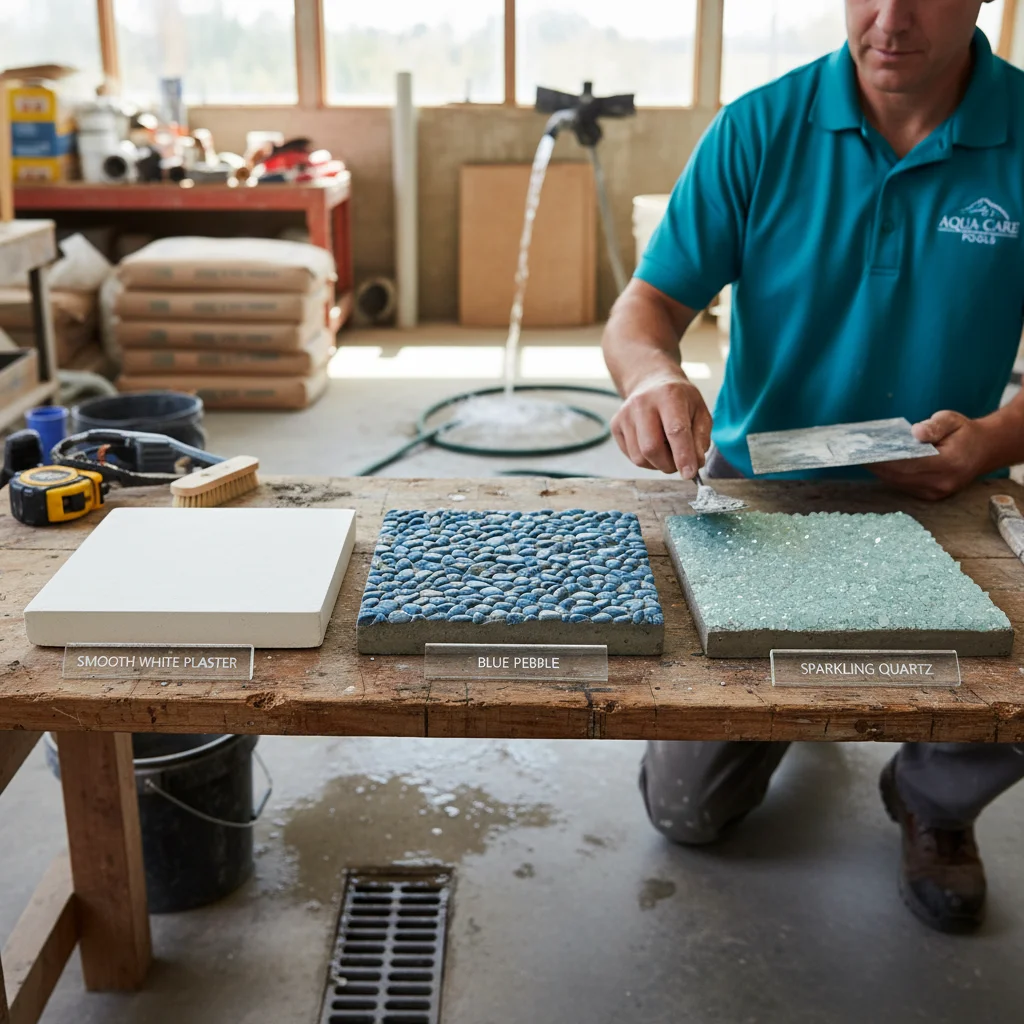
How each finish actually wears in San Diego water
San Diego tap water is hard. The San Diego County Water Authority reports average hardness levels that frequently run 300-400 ppm calcium carbonate depending on the source blend reaching your neighborhood. That hardness matters a lot for pool finishes.
White plaster is the original finish, Portland cement, marble dust, water. It’s porous by nature. In hard water, calcium carbonate deposits build on the surface and inside the pores simultaneously. You get scaling on top and etching underneath. Most white plaster in San Diego shows visible roughness within five years if chemistry isn’t dialed in weekly.
Quartz plaster adds ground quartz aggregate to the cement matrix. The quartz crystals fill the pores that make standard plaster so vulnerable. Hard water still scales on the surface, but it doesn’t etch through the way it does on plain plaster. The surface holds its texture longer and doesn’t turn that chalky gray that makes older plaster pools look tired.
Pebble finishes (NovaBead, Pebble Tec, and similar brands) are a different beast. Small river pebbles or glass beads are embedded in a cement base, and the top layer of cement is washed away during application to expose the aggregate. The result is a surface that’s almost entirely stone or glass, not cement. Hard water scales on the pebbles, but it doesn’t eat them. UV from San Diego’s 266 average sunny days per year fades the cement binder in lesser finishes, but with pebble, there’s barely any binder exposed to fade.
The takeaway: in San Diego water, every finish benefits from good chemistry. But the margin for error gets much wider as you go from plaster to quartz to pebble.
Cost ranges per square foot in 2026
Prices have stabilized somewhat after the material and labor inflation of 2023-2024, but they’re still meaningfully higher than they were five years ago. Here’s what you’re looking at on a typical San Diego pool, roughly 450 square feet of surface area:
White plaster
- Material + labor: $5-$8 per square foot
- Typical total: $4,500-$7,500
- Color options are limited (white, off-white, light gray, light blue tint)
Quartz plaster
- Material + labor: $8-$14 per square foot
- Typical total: $8,000-$14,000
- Wide color range; aggregate gives the water a sparkle that plain plaster can’t match
Pebble finishes
- Material + labor: $13-$22 per square foot
- Typical total: $12,000-$22,000
- Premium glass bead options push the top of that range higher; color and texture options are extensive
These numbers include basic prep, draining, and standard bead-blasting of the old surface. If your pool has significant structural cracks, delamination, or tile work that needs replacing, add that separately. Our pool resurfacing cost guide breaks down the line items in more detail, including what prep work actually costs in this market.
One thing homeowners often miss: the labor rate in San Diego runs higher than inland California markets. Expect the lower end of those ranges to apply to straightforward rectangular pools with good existing shell condition.
Lifespan differences and warranty fine print
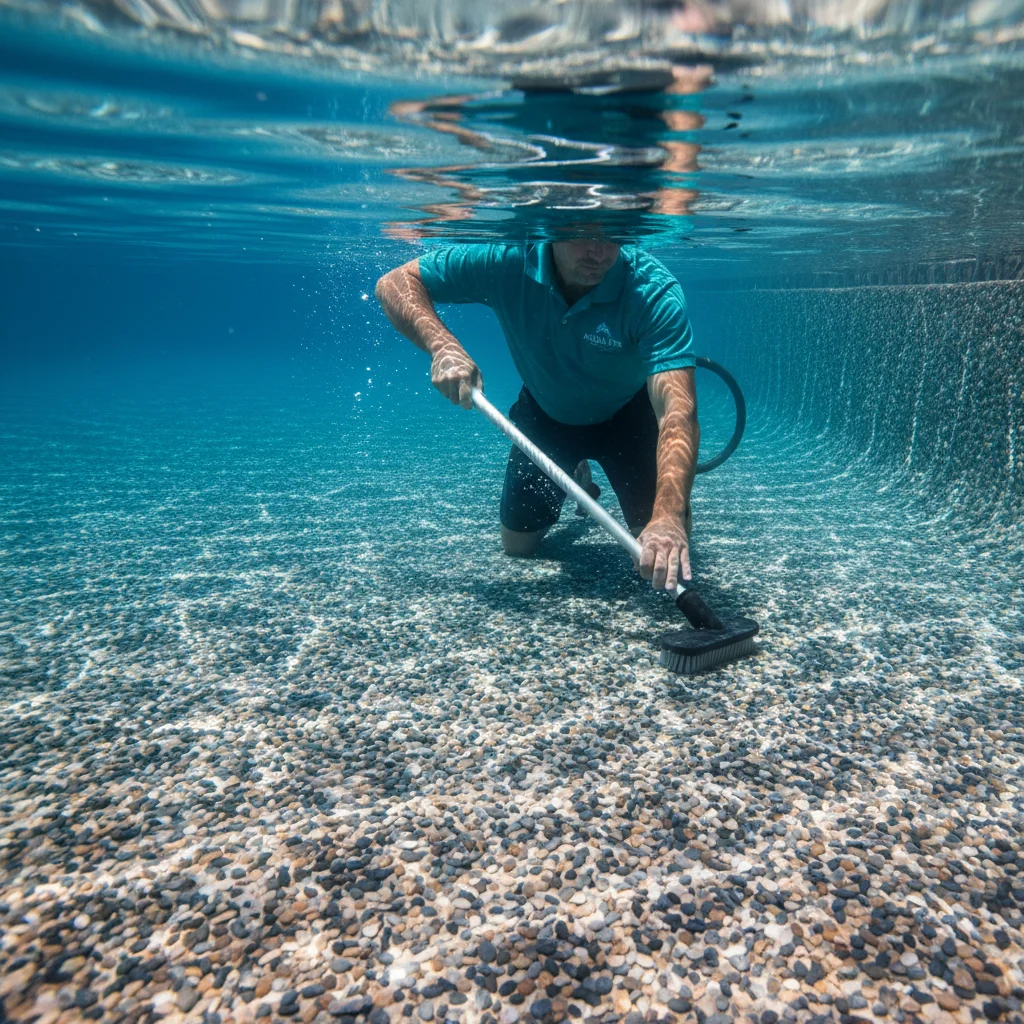
Lifespan claims from manufacturers are always best-case numbers. Here’s what holds up in practice locally:
White plaster: 7-12 years. The wide range reflects chemistry discipline. A homeowner who tests weekly and keeps calcium hardness between 200-400 ppm, pH 7.4-7.6, and total alkalinity 80-120 ppm will consistently hit the top of that range. Someone who lets chemistry drift, which is easy in a busy household, lands closer to seven.
Quartz plaster: 12-18 years with proper care. Most manufacturers offer a 10-year limited warranty on the material. Read the fine print: they almost universally require water chemistry logs, professional installation by a licensed contractor, and sometimes quarterly service records. A warranty claim without documentation goes nowhere.
Pebble finishes: 20-25 years is realistic. The premium brands warrant the finish for 10-15 years, with similar documentation requirements. Because the aggregate itself doesn’t degrade the way cement does, these finishes often look good well past the warranty period.
One thing that voids warranties across all three categories: pH below 7.2 sustained for more than a few days. Acidic water dissolves cement-based finishes. San Diego’s evaporation rate, water leaves faster than its minerals, tends to push pH up, not down. But homeowners who add too much acid trying to correct high pH can accidentally crater it. Consistent pool maintenance schedules prevent that problem before it starts.
Also worth noting: saltwater pools are harder on all three finishes. If you’re running or considering a salt system, talk to your contractor about finish compatibility before you commit. Our post on salt water pool conversion in San Diego covers how salt chemistry interacts with surface materials.
Which finish stains, which scales, which fades
Staining, scaling, and fading are three different failure modes, and each finish has its own Achilles’ heel.
Staining comes from metals (iron, copper, manganese) and organics (leaves, algae). White plaster stains easily and visibly, a brown iron stain on white plaster is hard to miss. Quartz is more resistant; the denser surface gives minerals fewer entry points. Pebble is the most stain-resistant, partly because the aggregate surface hides minor discoloration and partly because it’s simply harder for minerals to penetrate stone.
If your pool is in a yard with lots of trees or you’re on a well with high iron content, that stain resistance matters. San Diego’s hard water also carries trace minerals that accumulate over years. Check out our post on hard water and pools in San Diego for the chemistry detail behind this.
Scaling, white calcium deposits, is the universal San Diego problem. All three finishes scale. The difference is how easily you can remove it. On plaster, descaling with acid wash can also etch the surface beneath. On quartz, acid washing is less damaging because the quartz crystals resist mild acid better than cement does. On pebble, calcium deposits on the stones are mostly cosmetic and come off with a light acid wash without harming the aggregate.
Fading is primarily a quartz and colored-plaster issue. Pigments in the cement binder bleach under UV over time. White plaster doesn’t fade, it starts white and stays roughly white, though it gets rougher. Quartz colors (especially deep blues and greens) can lighten noticeably after 8-10 years of San Diego sun. Pebble holds color better because the color is in the stone itself, not a cement pigment. If color consistency over 15-plus years matters to you, pebble is the clear winner.
How to pick based on your pool, sun, and budget
There’s no universally right answer, but there’s usually a right answer for your situation. Here’s how to think through it:
Choose white plaster if you’re on a tight budget, the pool is older and may need other structural work in 10 years anyway, or you’re planning to sell the house within five years. It’s the lowest upfront cost, it looks clean and bright when new, and a skilled replastering job is exactly what a listing needs. Just don’t expect it to age gracefully without attentive chemistry management.
Choose quartz if you want the visual upgrade from plain plaster without the full pebble price, you have a saltwater pool, or you’re in a part of San Diego (Mira Mesa, Santee, El Cajon) where the water hardness at your tap is on the higher end. Quartz is the sweet spot for most homeowners who plan to stay 10-15 years. The color options also give you far more design flexibility than plaster.
Choose pebble if you’re doing a full backyard renovation, you want a finish that will outlast the next two resurfacing cycles, or your pool gets heavy use from kids and guests. The texture is slip-resistant compared to polished plaster, which matters on steps and benches. And if you’re investing in a high-end outdoor living space, a pebble finish reads as a premium product in a way that plaster simply doesn’t.
Sun exposure matters more than people realize. A pool that’s shaded by a fence or structure for half the day will see much less UV-driven fade than one baking in full south-facing exposure in Chula Vista or Escondido. If your pool is fully exposed, the fade resistance of pebble is a bigger advantage than it might look on paper.
For a full cost breakdown that accounts for pool size and prep complexity, our pool resurfacing cost post walks through the variables in detail. And when you’re ready to get specific numbers for your pool, our resurfacing service page explains what the process looks like from drain to fill.
Before hiring anyone for this job, verify their C-53 Swimming Pool Contractor license through the CSLB license lookup. Resurfacing is a licensed trade in California, and unlicensed work voids manufacturer warranties.
When to call us
Pool resurfacing isn’t a weekend project, it requires licensed contractors, proper surface prep, and curing conditions that vary by season. If your plaster is delaminating, showing structural cracks, or has gotten rough enough to scratch swimmers, the window to act is now, before the surface deteriorates further and drives up prep costs. Call us at (760) 642-1256 for a same-day estimate.
Frequently asked questions
How long does pool plaster last in San Diego?
Standard white plaster typically lasts 7 to 12 years in San Diego. The county's hard water accelerates calcium buildup, which etches plaster faster than in softer-water regions. Staying on top of chemistry extends that window noticeably.
Is pebble finish worth the extra cost?
For most San Diego homeowners who plan to stay in the house 10-plus years, yes. Pebble finishes run $6-$10 per square foot more than plaster upfront but last 20-25 years with proper care, which often makes the per-year cost competitive.
Does quartz pool plaster stain easily?
Quartz is more stain-resistant than standard plaster but less so than pebble. Mineral staining from San Diego's hard tap water is the main culprit. Consistent water chemistry and annual brushing keep most quartz finishes looking clean through their lifespan.
What pool finish is best for a saltwater pool in San Diego?
Quartz and pebble both hold up better than white plaster in saltwater pools. Plaster degrades faster when exposed to the slightly lower pH that salt systems tend toward. If you're running salt, budget for at least a quartz finish.
How much does pool resurfacing cost in San Diego in 2026?
Costs range from roughly $4,500-$7,500 for plaster, $8,000-$14,000 for quartz, and $12,000-$22,000 for pebble on a standard 400-600 sq ft pool. Exact pricing depends on pool size, shape, tile condition, and prep work needed.
Need professional help in San Diego County?
Splash Pro Pools provides every service in this post. Call for a free quote.