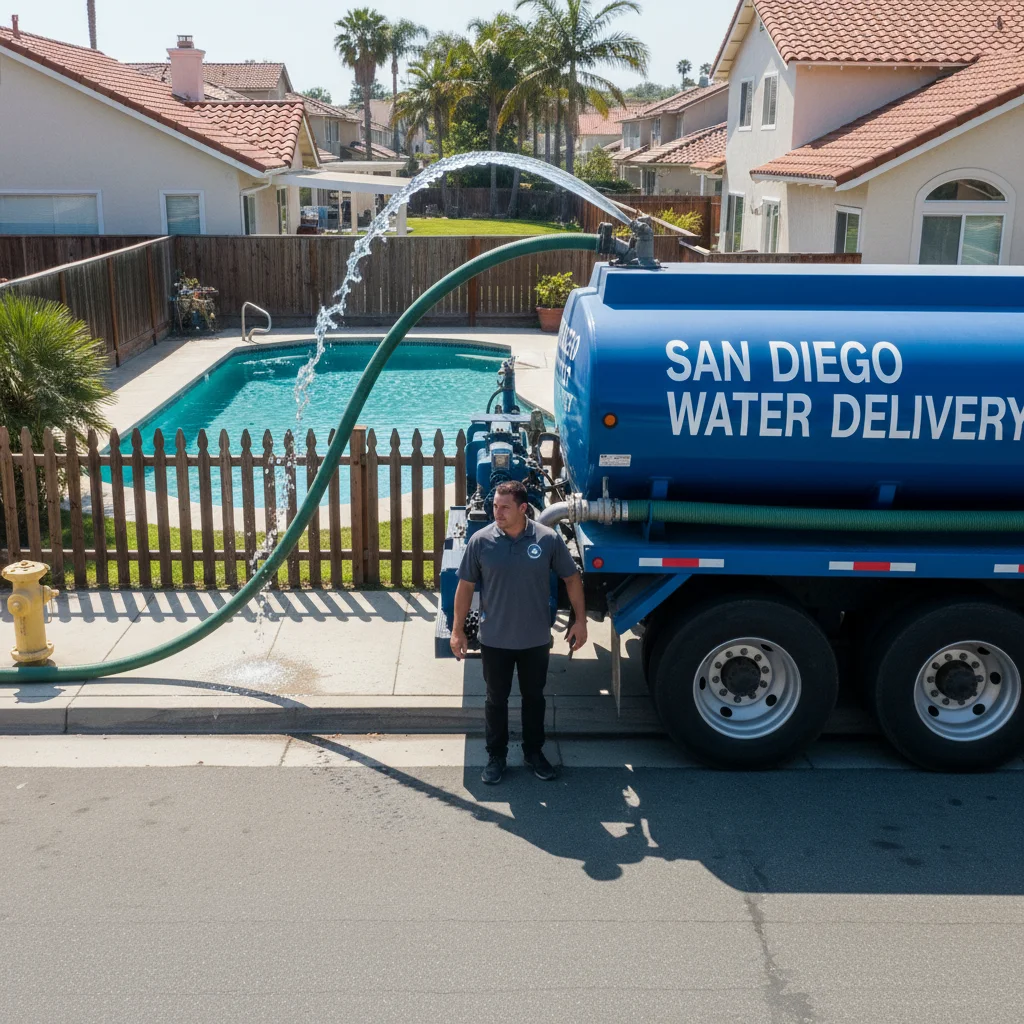
Some San Diego homeowners discover pool water delivery almost by accident, their plasterer mentions it, or a neighbor did it after a replaster and swears by it. Others are just tired of watching their water turn crusty and chalky within a year of a fresh fill. Either way, the question is the same: is paying for a truck full of water actually worth it, or is the garden hose fine?
Why some San Diego homeowners truck in pool water
The short answer: San Diego’s tap water is hard. Very hard.
The San Diego County Water Authority blends water from the Colorado River and Northern California’s State Water Project. Both sources carry significant mineral loads. Depending on which part of the county you’re in and what time of year it is, your tap water hardness can run anywhere from 300 to over 550 milligrams per liter of calcium carbonate. That’s well above the 200-400 mg/L sweet spot for pool water.
Every gallon of tap water you pump into your pool brings those minerals with it. Then the sun bakes off the water through evaporation, concentrating the calcium that’s left behind. Over time, you get white scale on the tile line, rough patches on the plaster, and clouded water that no amount of chemicals fully clears. Our hard water pool guide goes deeper on the chemistry, but the core problem is that you’re starting with a disadvantage before you even add a single chemical.
Trucked-in water changes that starting point. Bulk water suppliers typically source filtered or softened water with calcium hardness in the 100-200 mg/L range, sometimes lower. You fill the pool with a clean slate, balance the chemistry once, and the water stays stable longer. That’s the main reason homeowners bother.
A secondary reason is speed. Filling a 15,000-gallon pool from a garden hose at typical San Diego residential pressure (around 5-6 gallons per minute) takes roughly 40 hours. Two or three tanker loads can fill it in an afternoon.
What bulk water costs vs. filling from the hose
There’s no getting around it, delivery costs more upfront.
Most bulk water carriers serving San Diego charge between $250 and $450 per truckload, with trucks typically holding 5,000-6,500 gallons. A standard 15,000-gallon pool needs two to three loads. Budget $500-$1,350 for the water itself, plus any small delivery or hookup fees the supplier tacks on.
Filling from the hose sounds free, but it isn’t. San Diego Water charges residential customers on a tiered structure, and a pool fill pushes most households into Tier 2 or Tier 3 pricing. At current rates, filling a 15,000-gallon pool with municipal water typically runs $75-$175 depending on your baseline usage and meter size. That’s a meaningful gap compared to trucked water.
So why would anyone pay more? Because the math changes when you factor in what comes after the fill.
Hard tap water accelerates calcium scaling. You’ll spend more on sequestrants, descalers, and acid treatments month over month. Calcium deposits on tile need professional removal, our pool tile calcium cleaning service addresses exactly that buildup, and it’s not a one-time fix when the source water is hard to begin with. Soft fill water reduces how often you need those interventions. Over two or three years, the gap narrows or disappears entirely.
Hard-water math: how delivery cuts calcium buildup
Here’s the practical arithmetic. San Diego tap water at 400 mg/L calcium hardness means every 1,000 gallons you add brings roughly 3.3 pounds of calcium into the pool. Fill a 15,000-gallon pool and you’ve introduced nearly 50 pounds of calcium before the sun concentrates it further.
Trucked-in water at 150 mg/L cuts that to about 19 pounds for the same fill, less than half. The lower you start, the longer it takes to reach the scaling threshold of 600 mg/L where problems become visible and expensive.
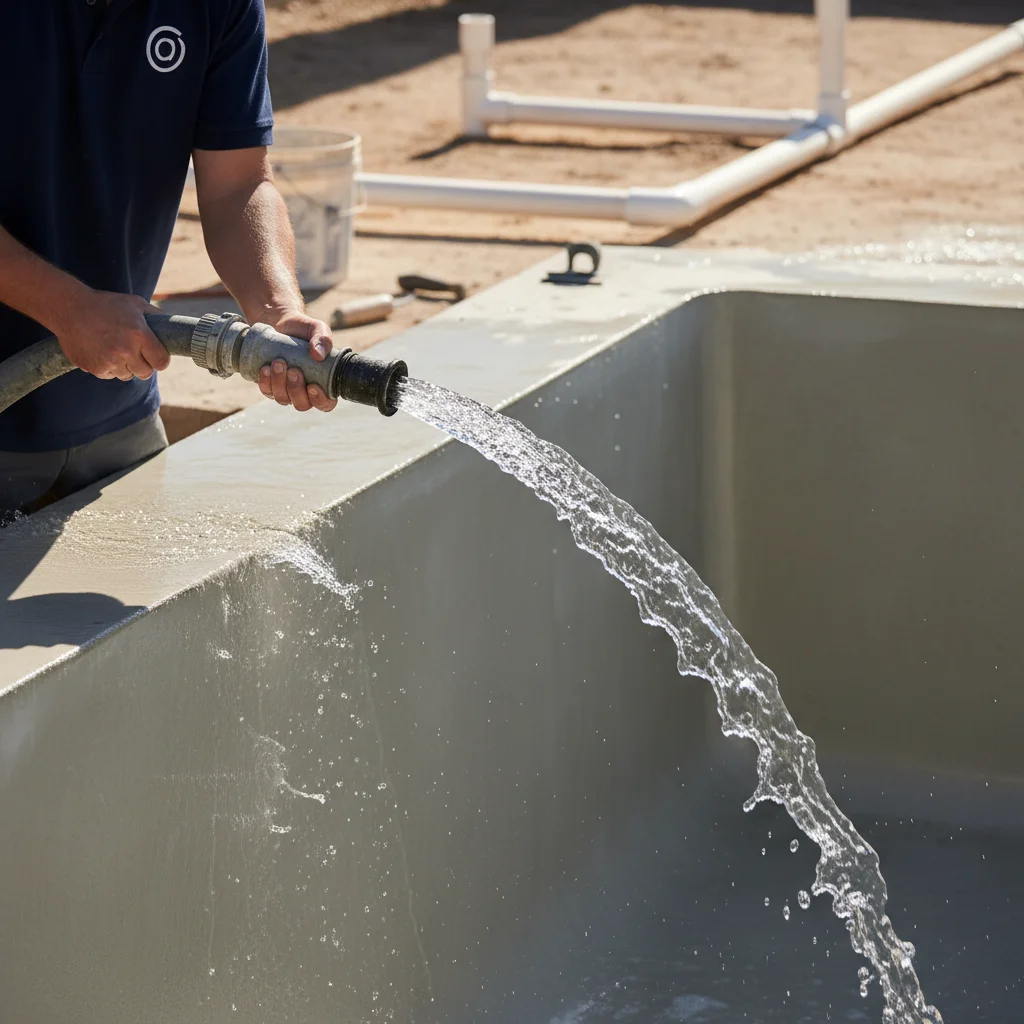
That gap matters most in the first year after a replaster. Fresh plaster is slightly porous and chemically reactive. Hard water during that curing period etches the surface and locks in calcium deposits that are nearly impossible to remove without acid washing. Starting with soft fill water gives new plaster the best possible environment to cure correctly and stay smooth.
It also matters for equipment. Salt cells, heat exchangers, and filter media all accumulate scale faster in hard water. Softer fill water extends service intervals and reduces wear. The EPA WaterSense program makes the broader case for water quality and efficiency, pool water isn’t covered directly, but the principle holds: the right water chemistry upfront saves resources downstream.
When you should drain and refill (and when not to)
Draining is a significant decision. San Diego has water restrictions, and a full drain-and-refill is wasteful if the water doesn’t actually need replacing. But sometimes it does.
Drain and refill when:
- Calcium hardness consistently exceeds 600 mg/L
- Total dissolved solids (TDS) top 2,500-3,000 mg/L
- Cyanuric acid (stabilizer) climbs above 100 ppm and won’t come down
- You’re resurfacing, acid washing, or repairing the shell, the pool has to be empty anyway
- The water has a persistent chemical imbalance that months of treatment haven’t resolved
Don’t drain just because:
- The water looks a little cloudy, that’s usually filtration or chemistry, not a reason to dump 15,000 gallons
- Someone told you to do it annually, most pools in San Diego don’t need annual draining if water chemistry is maintained properly
- The calcium is at 450 mg/L, that’s elevated but manageable with sequestrant and regular monitoring per our hard water guide
San Diego County generally advises against draining pools during drought conditions unless there’s a structural necessity, and many local water districts discourage it outside of permitted work. When a drain is genuinely warranted, pairing it with trucked-in soft water makes the most of the disruption.
How to coordinate delivery with resurfacing or acid wash
This is where pool water delivery goes from a nice idea to an essential step.
When you resurface a pool, new plaster, pebble finish, or quartz, the shell can’t stay dry for long after application. Plaster begins curing as soon as it’s troweled, and it needs water within 24 hours to hydrate properly. A slow hose fill can leave the top half of the shell exposed and drying unevenly for 12-18 hours. Trucked water fills the pool in a fraction of that time, protecting the finish from premature drying and shrink cracking.
After an acid wash, the same logic applies. The acid etches the surface, and you want to neutralize and fill quickly. Sitting empty exposes fresh plaster to air and fluctuating temperatures.
The coordination looks like this: schedule your pool resurfacing job, confirm the finish date with your contractor, then book bulk water delivery for the day the plaster is completed, or the morning after, at the latest. Confirm with your delivery supplier that they can arrive within a specific window, not just “sometime that day.” Most San Diego bulk carriers work with contractors on this timing routinely.
One more note: after the fill, give the water 24-48 hours of circulation before adding chemicals. New plaster leaches calcium and raises pH initially. Test before you treat, and bring the chemistry up gradually. Rushing the startup chemistry is one of the most common causes of premature plaster staining.
When to call us
If you’re planning a drain-and-refill, resurfacing project, or acid wash and want the water chemistry handled correctly from day one, that’s exactly where a licensed pool service professional earns their fee. Getting the startup chemistry wrong on fresh plaster voids most manufacturer warranties and causes damage that can’t be undone without another resurface.
Call us at (760) 642-1256 for a same-day estimate.
Frequently asked questions
How much does bulk pool water delivery cost in San Diego?
Most San Diego bulk water suppliers charge between $250 and $450 per truckload, with each load running roughly 6,000 gallons. A standard 15,000-gallon pool typically needs two to three loads, putting total delivery costs around $500-$1,350 before any hookup fees.
Is trucked-in water better for my pool than tap water?
It depends on your goals. San Diego tap water is hard, typically 300-550 mg/L calcium hardness depending on the source blend. Trucked-in water is usually filtered or softened to much lower hardness levels, which reduces calcium scaling on plaster, tile, and equipment. If you've just resurfaced, softer fill water is a real advantage.
How long does pool water delivery take?
A single truckload typically takes 30-60 minutes to pump into the pool. Scheduling lead time in San Diego is usually one to three business days, though some suppliers offer next-day service. Plan for two to three deliveries spread across a day if you're filling from empty.
Do I need a permit to have water trucked to my pool in San Diego?
No permit is required for a standard residential pool fill using a licensed bulk water carrier. The carrier handles their own water sourcing compliance. You may want to confirm your supplier is sourcing potable water and is operating under San Diego County regulations.
When should I drain my pool instead of treating the water?
Most pool professionals recommend draining when calcium hardness exceeds 600 mg/L, total dissolved solids climb above 2,500 mg/L, or cyanuric acid levels top 100 ppm. At those levels, dilution and chemical treatment become expensive and only temporarily effective.
Need professional help in San Diego County?
Splash Pro Pools provides every service in this post. Call for a free quote.