Your old single-speed pump died, or your SDG&E bill is climbing every summer, and now you’re looking at variable speed pool pumps. There’s a lot to sort out, California law, brand choices, rebates, so here’s exactly what you need to know before spending a dollar.
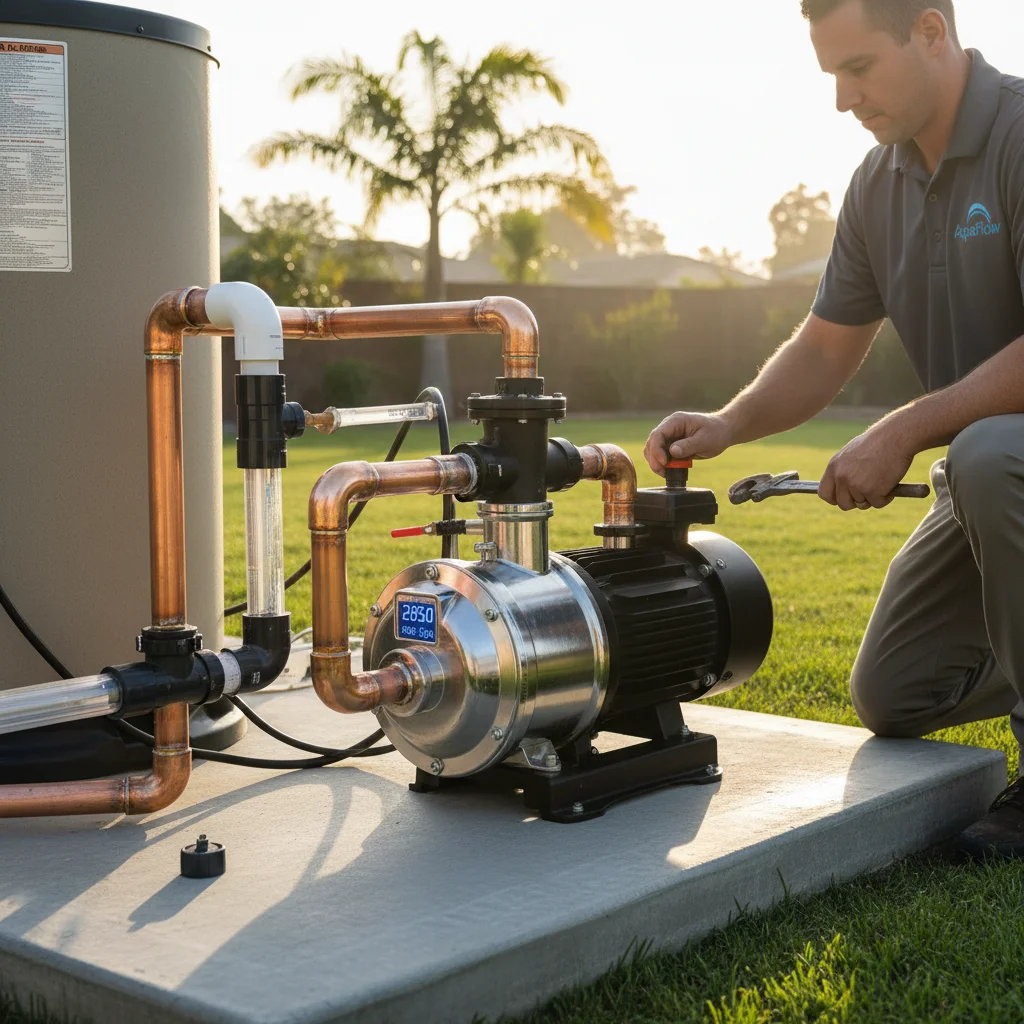
Why California Title 20 made variable speed pumps standard
Title 20 is California’s appliance efficiency regulation, enforced by the California Energy Commission. For pool pumps, the rule is straightforward: any pump rated above 1 horsepower that’s sold or installed in California must be a variable speed or variable flow model. The cutoff took effect January 1, 2017.
What that means practically: if your single-speed 1.5 HP pump gives out today, you can’t replace it with another single-speed 1.5 HP pump. A licensed contractor won’t install one, and any reputable supplier won’t sell you one for a residential pool installation.
The regulation exists because pool pumps are among the largest electricity consumers in a California home, in some households, second only to HVAC. Single-speed pumps run at one fixed speed (typically 3,450 RPM) whether the pool needs heavy circulation or just a slow turnover. That’s like driving your car everywhere at full throttle.
Variable speed pumps use a permanent magnet motor, the same type found in electric vehicles, that can dial down to 600 RPM for light filtration and ramp up when a waterfall or pressure cleaner needs more flow. Power consumption drops roughly with the cube of speed reduction. Cut the RPM in half, and you’re using about one-eighth the electricity. That’s not a marketing claim, it’s fluid dynamics.
One thing to know: Title 20 covers pumps, not the rest of your equipment pad. Your filter, heater, and salt system are separate. If you’re upgrading everything at once, our pool equipment installation and upgrades page covers what a full equipment refresh looks like.
Real energy savings on a typical San Diego pool
San Diego pool owners run their pumps year-round. We don’t close pools for winter. That means your pump clock is ticking 365 days, and energy costs compound fast on a single-speed motor.
A 1.5 HP single-speed pump running 8 hours a day at 3,450 RPM draws roughly 1,100-1,200 watts. At SDG&E’s current tiered rates, which can exceed $0.45 per kWh in the upper tiers during summer, that adds up to around $1,300-$1,600 per year just for the pump.
A variable speed pump running the same pool typically needs 6-8 hours at a low speed (1,500-2,000 RPM) for daily filtration, pulling 150-300 watts. That drops the annual pump cost to $200-$400, depending on your setup and rate tier.
The realistic annual savings range for a San Diego pool: $500 to $900. Pools with spas, water features, or pressure-side cleaners that demand burst flow will sit toward the lower end of savings because the pump still needs to hit high RPMs for those features. Pools with a simple return system and a suction-side cleaner do better.
Over a 10-year pump lifespan, you’re looking at $5,000-$9,000 in electricity avoided. The pump pays for itself, typically in 2-4 years, and keeps saving after that.
A note on SDG&E time-of-use rates: if you’re on a TOU plan, scheduling your pump’s filtration cycles during off-peak hours (typically 9 PM to 6 AM) adds another layer of savings on top of the speed reduction. Variable speed pumps with built-in schedulers make this easy to set and forget.
Pentair, Hayward, Jandy: which we install most
Three brands dominate the San Diego market, and all three make solid variable speed pumps. Here’s how we think about each one.
Pentair IntelliFlo
The IntelliFlo line is the most common pump we install, and for good reason. Pentair’s motor reliability is excellent, their warranty support is straightforward, and the IntelliFlo integrates cleanly with automation systems if a homeowner wants to add remote control later. The VSF model adds flow sensing on top of speed control, which is useful for pools where chemistry or cleaner performance is sensitive to flow rate.
Hayward EcoStar and TriStar VS
Hayward’s variable speed line is priced slightly more aggressively than Pentair’s and fits pools where the budget is tighter. The EcoStar is a good workhorse. One thing to know: Hayward’s interface takes a little longer to learn than Pentair’s, and some older Hayward automation systems don’t integrate as smoothly with the VS pumps.
Jandy VS FloPro
Jandy (owned by Fluidra, same parent as AquaLink) is our go-to when a homeowner already has a Jandy automation or heater system. The FloPro plays well with AquaLink controls and keeps the equipment pad on a single ecosystem. For new installs without existing automation, it’s a strong choice but not always the default.
All three brands qualify for SDG&E rebates when installed by a licensed contractor. If you want to dig deeper into pump repair vs. replacement decisions, our pool pump repair guide walks through when a fix makes sense and when a full swap is the better call.
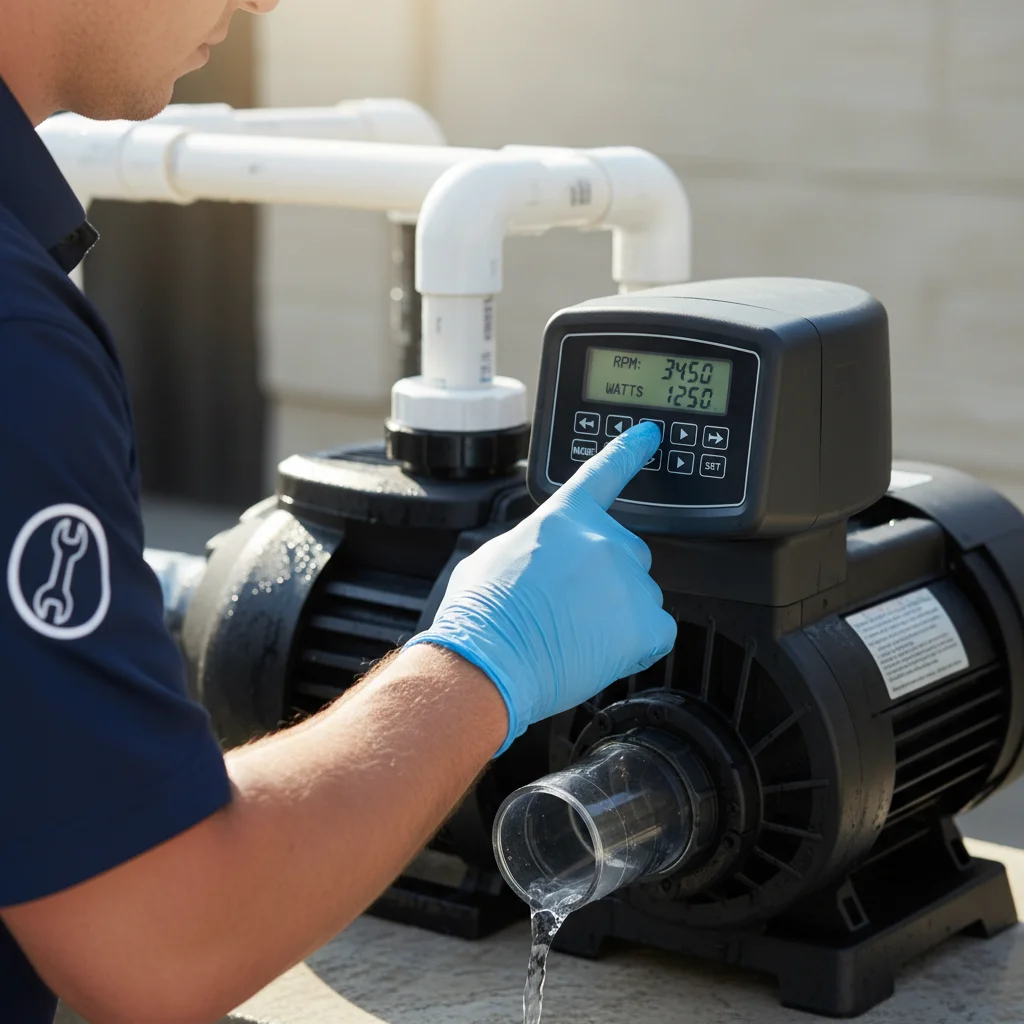
Installation cost and SDG&E rebate options
Variable speed pump installations in San Diego range from $900 to $1,800 for most residential pools. Here’s what drives the spread:
Equipment cost, Variable speed pumps retail between $500 and $900 depending on brand and model. The IntelliFlo VSF runs higher; entry-level Hayward EcoStar runs lower.
Labor, A direct equipment swap (same pad, same plumbing connections) runs 2-4 hours. If the existing plumbing is a different size, corroded, or needs new unions, add another hour or two.
Electrical, Most variable speed pumps run on 230V, same as single-speed units. If your existing wiring is undersized or the disconnect needs updating, that adds to the bill.
SDG&E rebates, SDG&E has historically offered $200-$300 for qualifying variable speed pool pump installations through its energy efficiency programs. Availability changes, so verify current offers directly with SDG&E before purchasing. Your installing contractor can also confirm eligibility. The rebate doesn’t require any special application process beyond using a qualifying pump model and having the work done by a licensed contractor.
On the contractor note: California law requires a C-53 (Swimming Pool) license for pool equipment installation. Before hiring anyone, it takes 30 seconds to verify their license at the CSLB license check tool. This matters because an unlicensed install can void the pump warranty and create liability if something goes wrong electrically.
When you add the SDG&E rebate and annual energy savings, the net cost of a variable speed pump, after year two or three, is effectively zero. You’re running a better pump and getting paid back in utility savings.
Common settings mistakes that kill the savings
A variable speed pump programmed wrong is almost as expensive to run as the single-speed it replaced. We see these mistakes constantly when we take over service on a pool.
Running at maximum RPM all the time. Some installers set a single high-speed program and leave. The pump runs at 3,450 RPM 24/7, draws full power, and saves nothing. For standard filtration, 1,500-2,000 RPM is enough for most residential pools. You only need the high speed when you’re running a pressure-side cleaner, a waterfall, or a spa.
Running it too few hours at low speed. Swinging the other direction: homeowners dial the speed way down but also cut the run time to 4 hours a day. The pool doesn’t turn over enough water, chemistry gets unstable, and algae moves in. San Diego’s heat means you need a full turnover, ideally 1.5 turnovers per day. Calculate your pool volume (length × width × average depth × 7.5 for gallons), find your pump’s flow rate at your chosen RPM, and set the schedule accordingly.
Not using the scheduler. Every major variable speed pump has a built-in timer and multi-speed scheduler. Not using it means you’re manually running the pump or leaving it on one setting. The scheduler is how you automate off-peak-hour filtration for TOU savings.
Skipping the priming cycle check after install. A variable speed pump needs proper priming, especially if the equipment pad has long suction lines. Running dry at startup can damage the seal. After any new install, verify the pump primes fully before leaving it on an automated schedule.
Ignoring filter pressure. A variable speed pump running at low RPM will show lower filter pressure than your old single-speed did. Homeowners sometimes assume a dirty filter when the pressure looks low, then backwash too often. Learn what your filter’s clean pressure is at each programmed RPM, and set your backwash trigger accordingly. Our pool filter cleaning guide covers pressure baselines in more detail.
Getting the settings right matters as much as buying the right pump. When we install a variable speed pump, we program all the schedules before we leave and walk the homeowner through what each speed is doing and why.
When to call us
Variable speed pump installation involves 230V electrical work, plumbing unions, and programming that affects your pool’s chemistry and equipment life. It’s not a DIY swap. If your pump has failed, if you’re getting a Title 20 compliance notice from a home sale inspection, or if you want to lock in SDG&E rebates before the current program changes, that’s the right time to bring in a licensed pro.
Call us at (760) 642-1256 for a same-day estimate.
Frequently asked questions
Is a variable speed pool pump required in California?
Yes. California Title 20 requires any pool pump over 1 horsepower sold or installed after January 1, 2017 to be a variable speed or variable flow model. If you're replacing an older single-speed pump, you cannot legally install another single-speed unit of the same size.
How much can I save on my SDG&E bill with a variable speed pump?
Most San Diego homeowners save $500-$900 per year depending on pool size, run time, and current rate tier. Running at lower RPMs during off-peak SDG&E hours pushes savings higher.
Does SDG&E offer a rebate for variable speed pool pumps?
SDG&E has offered rebates of $200-$300 for qualifying variable speed pool pump installations through its energy efficiency programs. Availability changes seasonally, so confirm current offers at the SDG&E Energy Savings Center before purchasing.
How long does it take to install a variable speed pool pump?
A straightforward swap on an existing equipment pad takes two to four hours. If plumbing or electrical needs to be updated to match the new pump, the job can run a full day.
What's the most common mistake homeowners make with variable speed pumps?
Running the pump at high RPMs all the time, which eliminates most of the energy savings. The pump should run at 1,500-2,000 RPM for filtration and only ramp up to 3,000-3,450 RPM for features like waterfalls or cleaners.
Need professional help in San Diego County?
Splash Pro Pools provides every service in this post. Call for a free quote.