Pool equipment doesn’t fail on a schedule, but San Diego’s year-round swim season means a broken pump or dead heater hits harder here than almost anywhere else. Knowing what to replace, in what order, and what the whole project actually costs takes the guesswork out of a job that otherwise feels overwhelming.
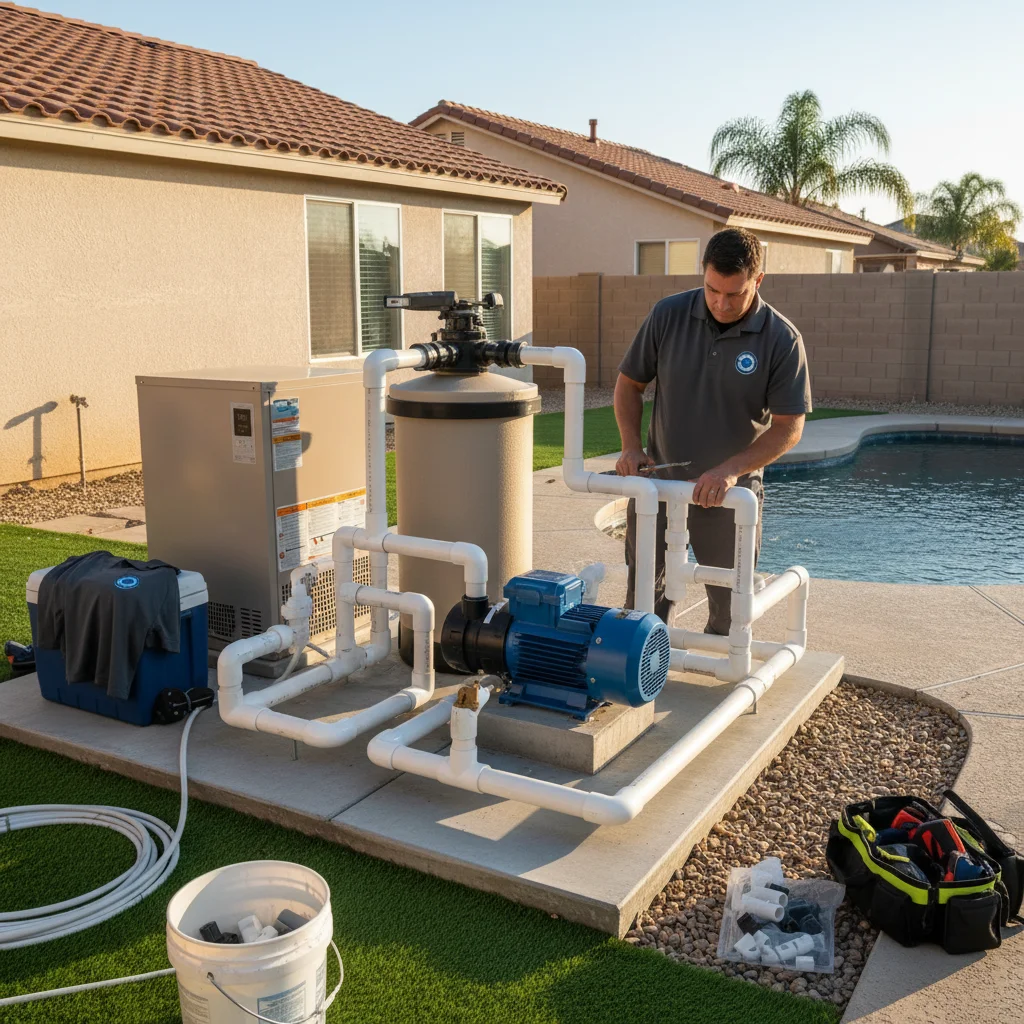
Signs your pool equipment is on borrowed time
Most equipment gives you warning before it quits completely. The trick is knowing which warnings matter.
Pump, A single-speed pump that’s grinding, cavitating, or tripping the breaker is near the end. So is one that’s simply old: single-speed motors over ten years old are costing you money every month in electricity compared to a modern variable-speed unit. If your pump is humming but not moving water, the capacitor may be the only culprit, a cheap fix. If the shaft seal is leaking and the motor windings smell burnt, you’re replacing the whole unit.
Filter, Cartridge filters that need cleaning every two to three weeks instead of every one to three months are either undersized or ready for new elements. Sand filters with channeling (the pressure barely rises even when the water runs cloudy) need a media replacement or a full swap. A cracked tank on any filter type is never worth patching.
Heater, Heaters corrode from the inside out in coastal San Diego air. Sooty burner decks, yellow flames instead of blue, and heat exchangers leaking water onto the pad are all end-of-life signals. Our pool heater repair guide breaks down what’s fixable versus what’s not.
Automation, Older relay-based automation boards that lose programming after power outages, or proprietary remotes that haven’t had a firmware update in years, are worth replacing before they strand you with no scheduling control at all.
The pattern across all of it: small failures that recur more than twice in a season usually cost more to keep repairing than to replace.
Pumps, filters, heaters, automation: upgrade priority order
When budget means you can’t do everything at once, this is how we sequence it for most San Diego homeowners.
1. Pump first
The pump is the heart of the system. Everything downstream depends on adequate flow. A variable-speed pump is also where you’ll see the fastest payback, typically 40 to 60 percent less energy consumption than a comparable single-speed unit. If you’re on the fence about the details, our deep-dive on variable-speed pumps in San Diego covers the math behind that savings claim.
2. Filter second
A new pump running through an undersized or compromised filter is wasted potential. Sizing the filter to match your new pump’s flow range, and the square footage of your pool surface, means cleaner water and less backwash waste. For most residential pools in San Diego, a cartridge filter in the 400-500 square foot range handles the job well. Detailed filter maintenance questions? Our pool filter cleaning guide is a good starting point.
3. Heater third
Heaters are expensive to install and expensive to run. Get the circulation side right first, then add heat. A heater connected to poor flow will short-cycle, fail faster, and void most manufacturer warranties.
4. Automation last, but don’t skip it
Automation earns its cost back in two ways: convenience and protection. Automated systems can throttle your pump’s speed based on time of day, run your pool lights on a schedule, and alert you to flow faults before they become chemistry disasters. In newer systems, that’s all managed from a phone app. It’s not a luxury item anymore, it’s how modern equipment pads work.
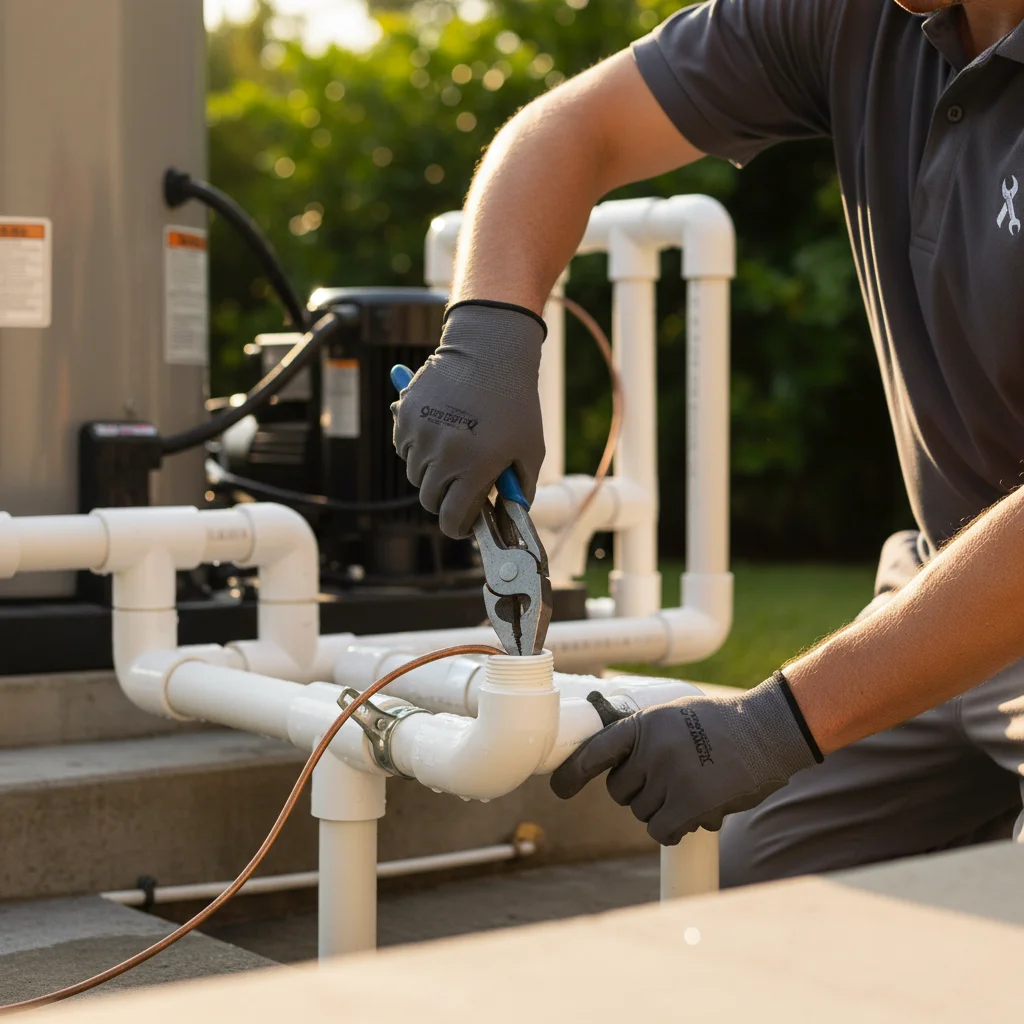
What a typical equipment-pad rebuild costs in San Diego
Prices fluctuate with material costs, but here’s a realistic range for 2025-2026 installations in San Diego County. These are installed costs, labor and materials included.
- Variable-speed pump (1.5-2 HP): $900-$1,400 installed
- Cartridge filter (400-500 sq ft): $700-$1,100 installed
- Gas heater (400k BTU): $2,200-$3,200 installed, not including gas line work
- Heat pump (instead of gas): $3,500-$5,500 installed
- Entry-level automation (single-body + app): $1,200-$2,000 installed
- Full equipment-pad rebuild (all of the above): $7,000-$13,000 depending on scope
Those ranges are wide because San Diego installs vary significantly, a pad swap in a flat Chula Vista backyard with good gas access is faster than a job on a steep La Jolla lot with 80 feet of conduit run to the panel.
Pad demolition, bonding wire work, and any concrete cutting add to the bottom line. So does running a new dedicated 240V circuit, which many older homes need when upgrading to a modern variable-speed pump and automation combo.
For context on how equipment costs fit into your overall pool budget, our breakdown of pool maintenance costs in San Diego gives you the full picture.
Permits, Title 20, and SDG&E rebates
This section trips up a lot of homeowners, so let’s be direct.
Permits, In San Diego, permit requirements depend on what’s changing. A direct equipment replacement (same type, same location) usually doesn’t trigger a permit. Running new gas lines, adding a subpanel, or installing a new heater where none existed before requires a permit from the City of San Diego Development Services Department or the relevant jurisdiction in unincorporated county areas. Working without a permit when one’s required can complicate home sales and insurance claims. We pull every permit the job legally requires.
Before hiring anyone, verify their contractor’s license at the CSLB license lookup tool. A pool equipment installation involves both C-53 (pool/spa) and potentially C-36 (plumbing) or C-10 (electrical) work. Confirm whoever you hire carries the right classifications.
Title 20, California’s Title 20 appliance efficiency standards, enforced by the California Energy Commission, require that any replacement pump on a residential swimming pool above 0.7 horsepower must be a variable-speed model. That’s been the law since 2021. A contractor who quotes you a single-speed replacement pump is quoting you something they can’t legally install.
SDG&E rebates, SDG&E has historically offered rebates on qualifying variable-speed pumps through their energy efficiency programs. Rebate availability and amounts change periodically, but they’ve been in the $50-$200 range for pool pumps. The San Diego County Water Authority also runs water-efficiency rebate programs that occasionally include pool equipment. We check current incentives at the time of every estimate and apply them to your quote directly, you shouldn’t have to chase that paperwork yourself.
The net effect: a variable-speed pump that looks expensive on a quote often pencils out more favorably once the rebate and the monthly energy savings are factored in.
How we sequence installs to avoid green-pool downtime
This is the operational question most homeowners never think to ask until their pool goes green three days into a repair. Here’s how we handle it.
A pool without circulation goes stagnant fast, especially in San Diego’s warmer months. Algae can take hold in 48 to 72 hours without a pump running. So when we plan a full equipment-pad rebuild, we don’t pull the old pump out and leave it out while we wait for the heater to arrive.
Our approach: we confirm every piece of equipment is on-site before we disconnect anything. If a component is back-ordered, we communicate that upfront and schedule accordingly rather than leaving your system offline. For multi-day jobs, we restore temporary circulation at the end of each day where it’s possible. We also test and balance your chemistry before we break down the old system so the water starts the downtime period in a stable state.
When new plumbing is involved, new union placements, rerouted return lines, or added bypass valves for a heater, we pre-fabricate as much of the PVC work as possible before the day-of install. That cuts the actual offline window to a few hours rather than a full day.
If your pool does turn green during or after an equipment failure, our green pool recovery service can get it back to swimmable condition quickly. But the goal is always to prevent that in the first place.
When to call us
Pool equipment installation in San Diego involves licensed electrical work, gas connections, and local permit requirements that aren’t DIY territory. If your pad is showing multiple failure signs at once, or if you’re starting from scratch on a new pad layout, a licensed pool contractor will save you time, money, and a lot of headaches.
Pool equipment installation and upgrades is one of our core services across San Diego County. Call us at (760) 642-1256 for a same-day estimate.
Frequently asked questions
Do I need a permit to replace pool equipment in San Diego?
Most like-for-like equipment replacements, swapping an old pump for a new variable-speed model, don't require a permit. Adding a heater, running new gas lines, or doing any electrical work typically does. We pull the permits so you're covered.
How long does a full equipment-pad rebuild take?
A straightforward rebuild, new pump, filter, heater, and automation, usually takes one full day on the equipment pad. If new gas or conduit runs are needed, plan for two days. We schedule it to minimize time without filtration.
What is California Title 20 and does it affect my pool pump?
California Title 20 is the state's appliance efficiency regulation. Since 2021, any replacement pump on a residential pool over 0.7 horsepower must be a variable-speed model. Single-speed pumps are no longer legal to install in that application.
Can I get a rebate for a variable-speed pool pump in San Diego?
Yes. SDG&E's Marketplace program has historically offered rebates on qualifying variable-speed pumps. Rebate amounts change, so check sdge.com or ask us when we quote the job, we factor current incentives into every estimate.
How do I know if my pool heater needs replacement or just repair?
Heaters under five years old that have a specific fault, a bad igniter, a failed pressure switch, are almost always worth repairing. Heaters over ten years old with corrosion in the heat exchanger or recurring ignition failures usually cost less to replace than to keep patching.
Need professional help in San Diego County?
Splash Pro Pools provides every service in this post. Call for a free quote.